
Detecting in time: how
to turn an inspection into
prevention
What's the use of identifying a risk if we can't then track how it evolves?
Inspections are a fundamental tool for understanding the level of exposure of an operation, a facility, or an asset. They make it possible to detect vulnerabilities, identify critical points, and set recommendations to reduce the likelihood of an incident occurring.
But the survey is just the beginning. Because risks evolve, conditions change, and measures that are sufficient today may stop being so over time.
And there's an even more important factor: by the time a risk materializes, it's often too late to prevent its consequences. That's why being able to detect it, understand it, and track the actions needed to reduce it can make a real difference.
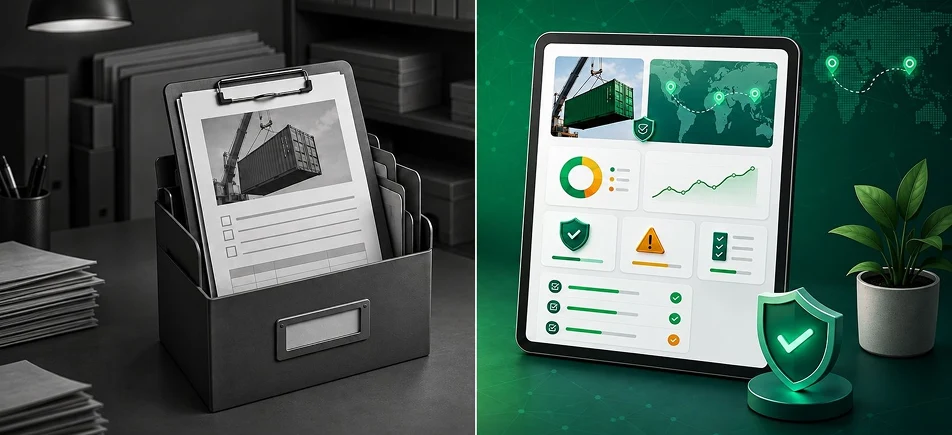
The real challenge appears after the inspection
An assessment can uncover multiple opportunities for improvement. Some will require immediate attention; others can be resolved progressively. There will be recommendations that get implemented, others that remain pending, and others whose priority will change over time.
That's when a key question comes up: what happens to all that information after the report is delivered?
When results end up scattered across documents, spreadsheets, emails, and different people in charge, keeping an up-to-date view becomes complex. It also becomes harder to know which recommendations were addressed, which are still open, and where exposure remains highest.
For everyone involved in risk management (from engineering and prevention to underwriting and operational areas) having that information clearly available makes it possible to set priorities and make better-supported decisions.
A detected risk needs follow-up
Prevention requires continuity.
A recommendation may come out of an inspection, but its impact depends on what happens afterward: assigning owners, defining actions, tracking progress, and verifying that the observed conditions have actually improved.
In practice, that follow-up can be decisive. A vulnerability detected in time can remain open for weeks or months if there's no clear way to track its status, priority, and progress.
This follow-up also makes it possible to build a history. Over time, that information helps understand how a risk evolves, detect recurrences, and identify the points that need the most attention.
In that process, technology starts to play an increasingly relevant role. Centralizing information allows a survey to stop being an isolated document and become a tool that supports future decisions.
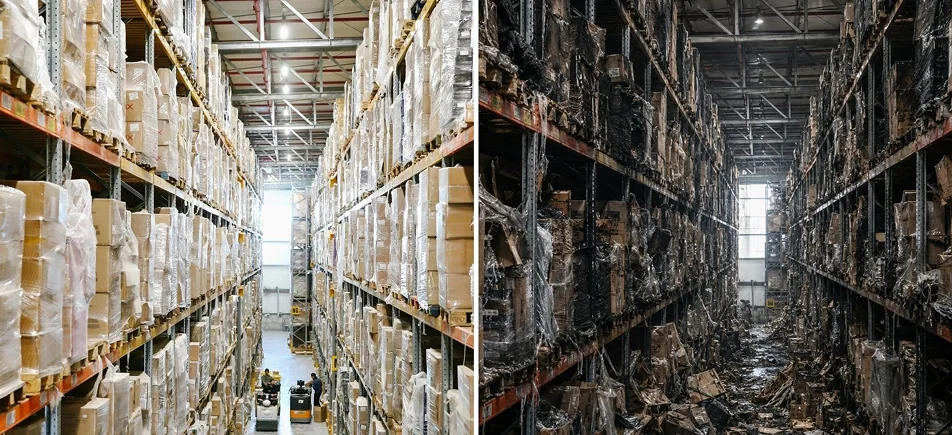
What if we could also have traceability over risks?
With 25 years of experience in risk prevention and management, Assistcargo has been incorporating technology to give greater value to the information gathered in each survey and turn it into a resource for decision-making.
That experience points to a concrete need: having traceability over every detected risk and the actions generated from it.
Turning surveys into useful information
With this approach in mind, Assistcargo developed AssistRisk, its platform focused on centralizing risk assessment and follow-up.
The tool makes it possible to survey and assess each insured party's exposure, organize the information gathered during inspections, and generate reports, recommendations, and mitigation plans. Based on that information, the different areas involved can check the status of risks and follow up on the defined actions.
This makes it possible to better leverage the knowledge generated during each assessment and provides a comprehensive view of the surveyed risks.
For an insurer, it can mean having more information to assess an exposure. For an engineering team, having a tool to organize and track recommendations. For an organization, understanding where its most sensitive points are and which actions should be prioritized.
Anticipating starts with knowing where to act
Risk management has a window of opportunity: the time between detecting a vulnerability and that vulnerability ending up causing a loss.
The better the information available during that period, the greater the chances of prioritizing actions and reducing exposure.
Inspections generate an enormous amount of knowledge. The challenge lies in keeping it available, up to date, and connected to the decisions that follow.
Because detecting a risk in time opens up an opportunity. Doing something with that information is what allows you to make the most of it before it's too late.